

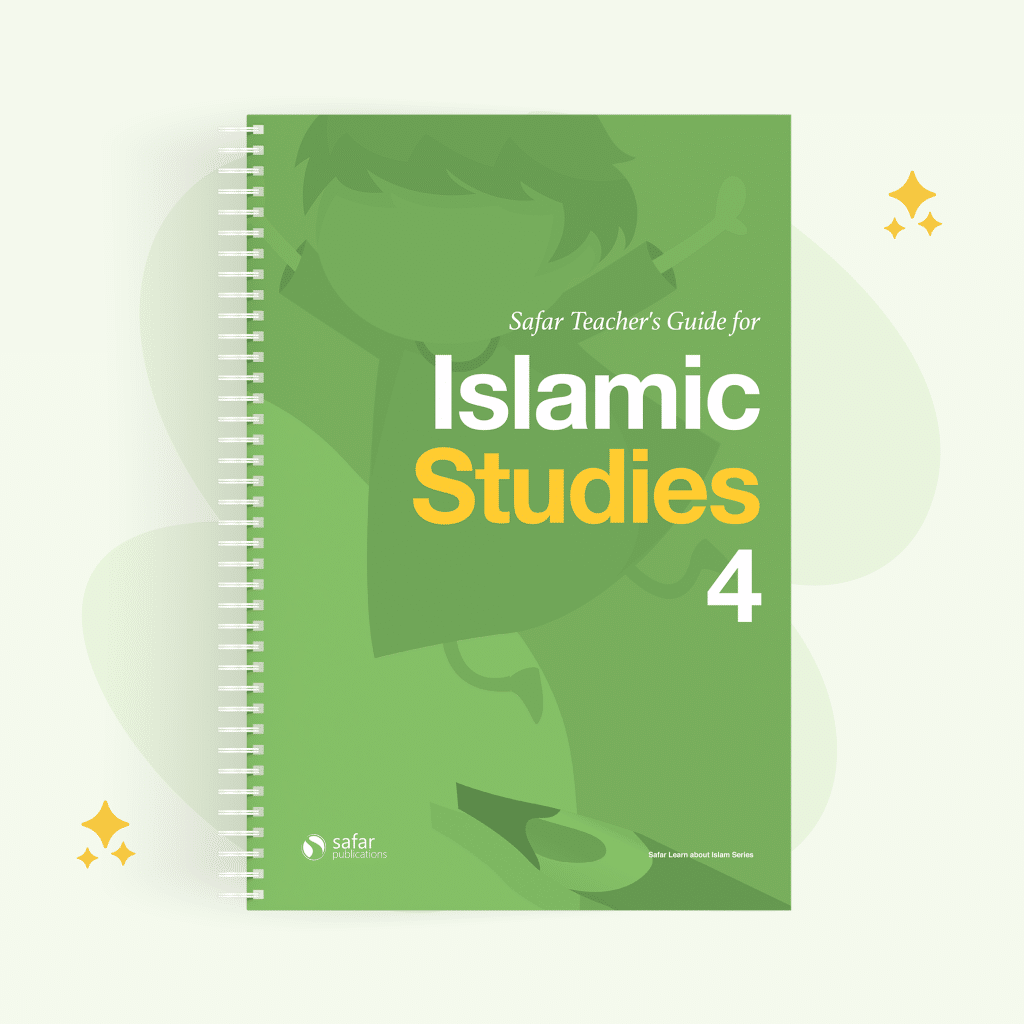
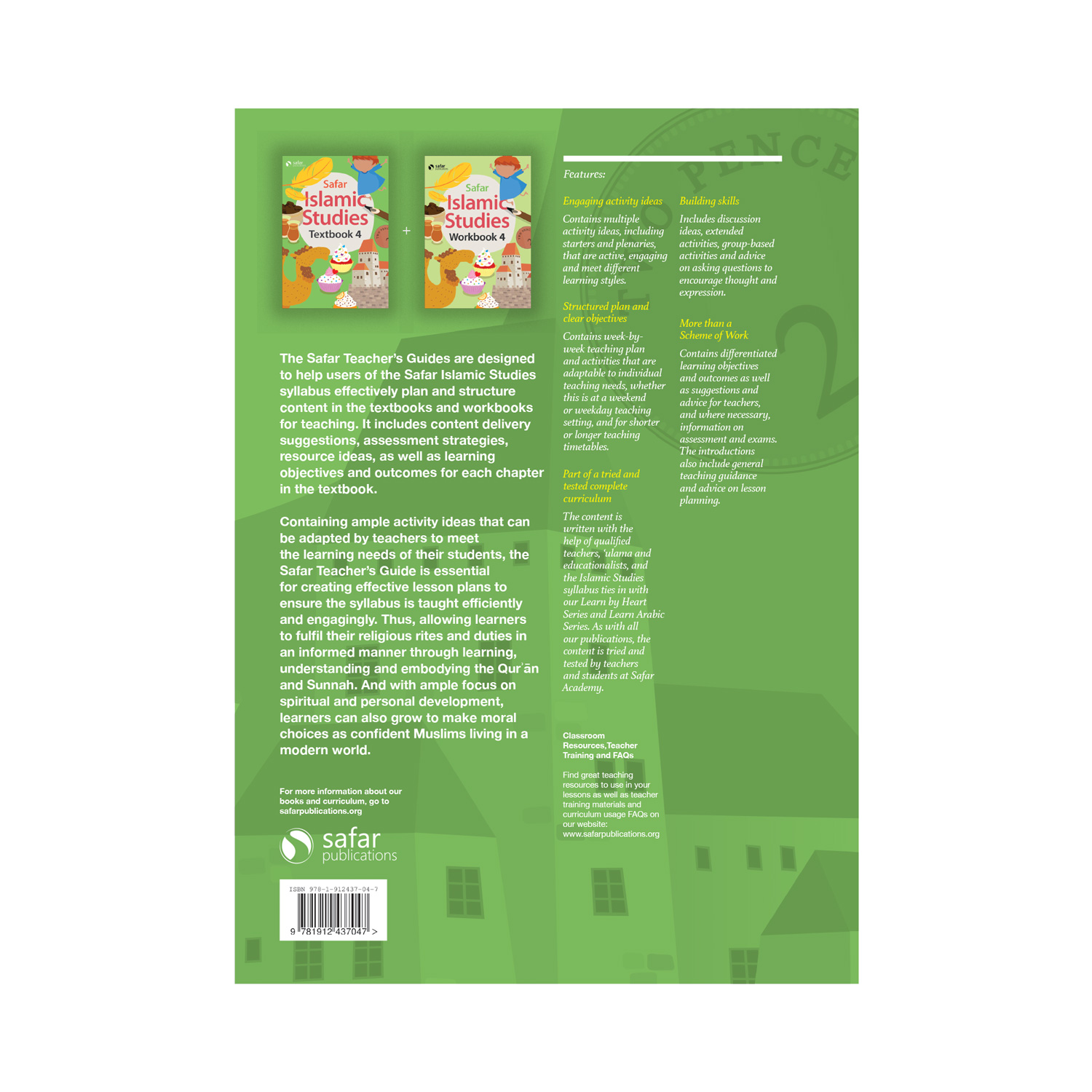
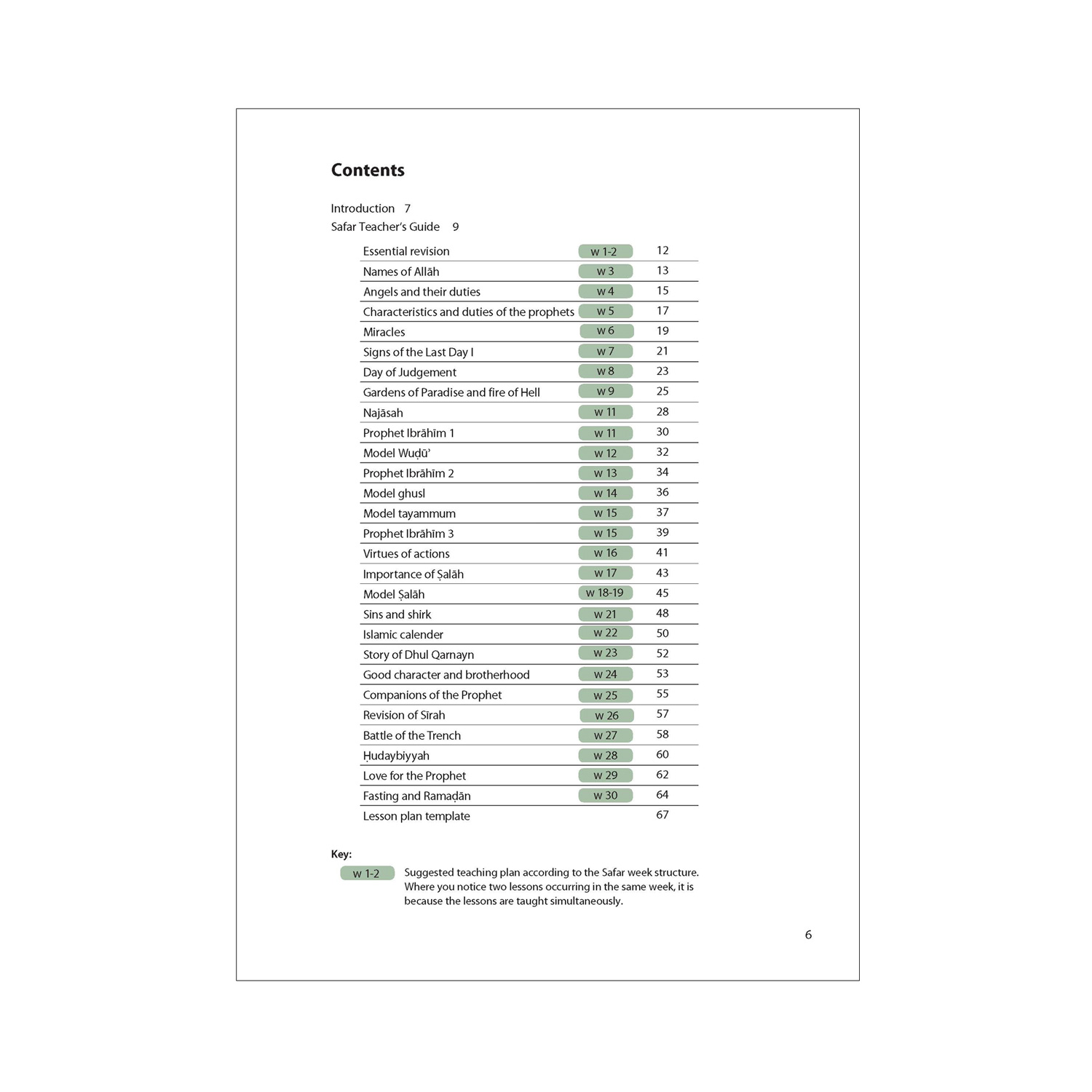
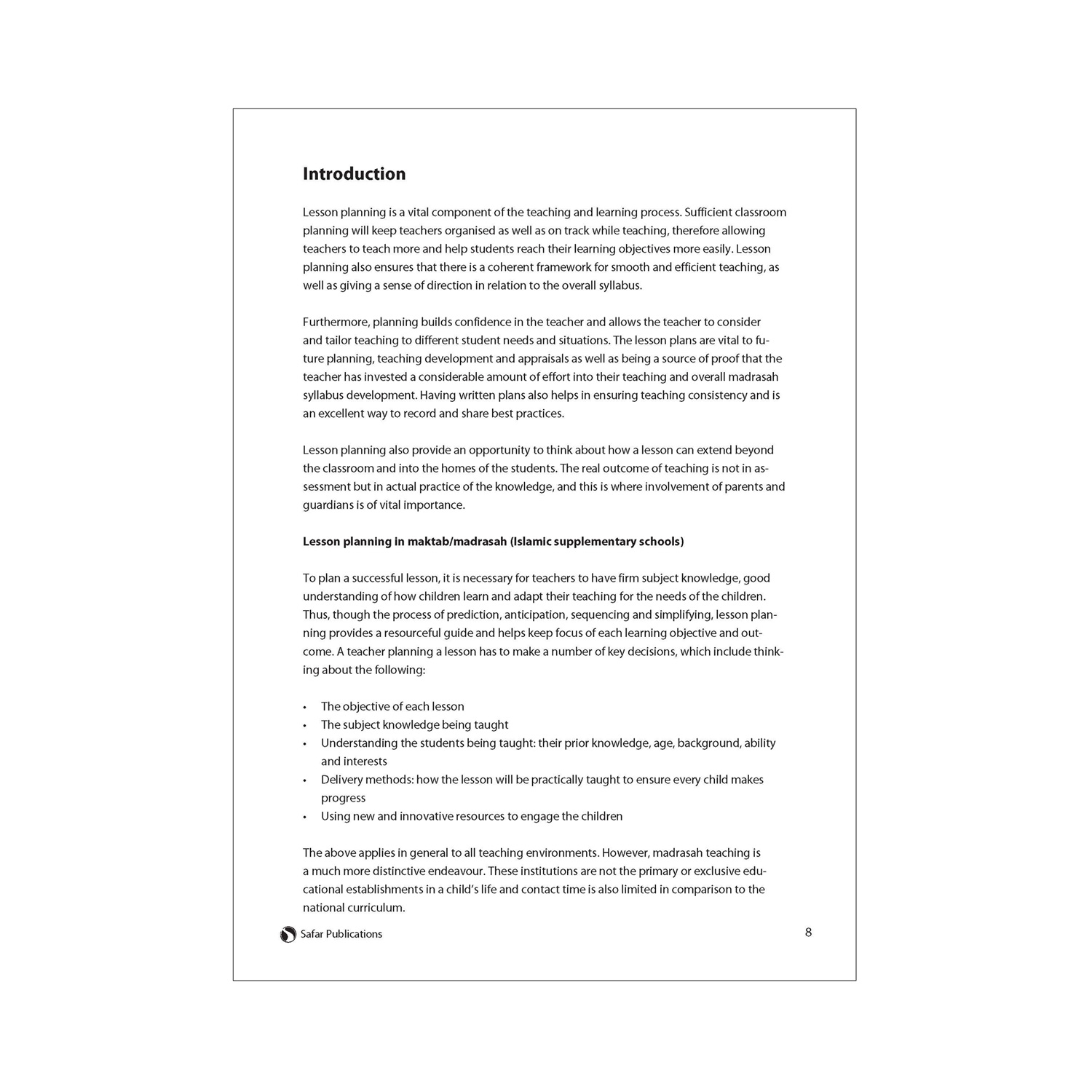
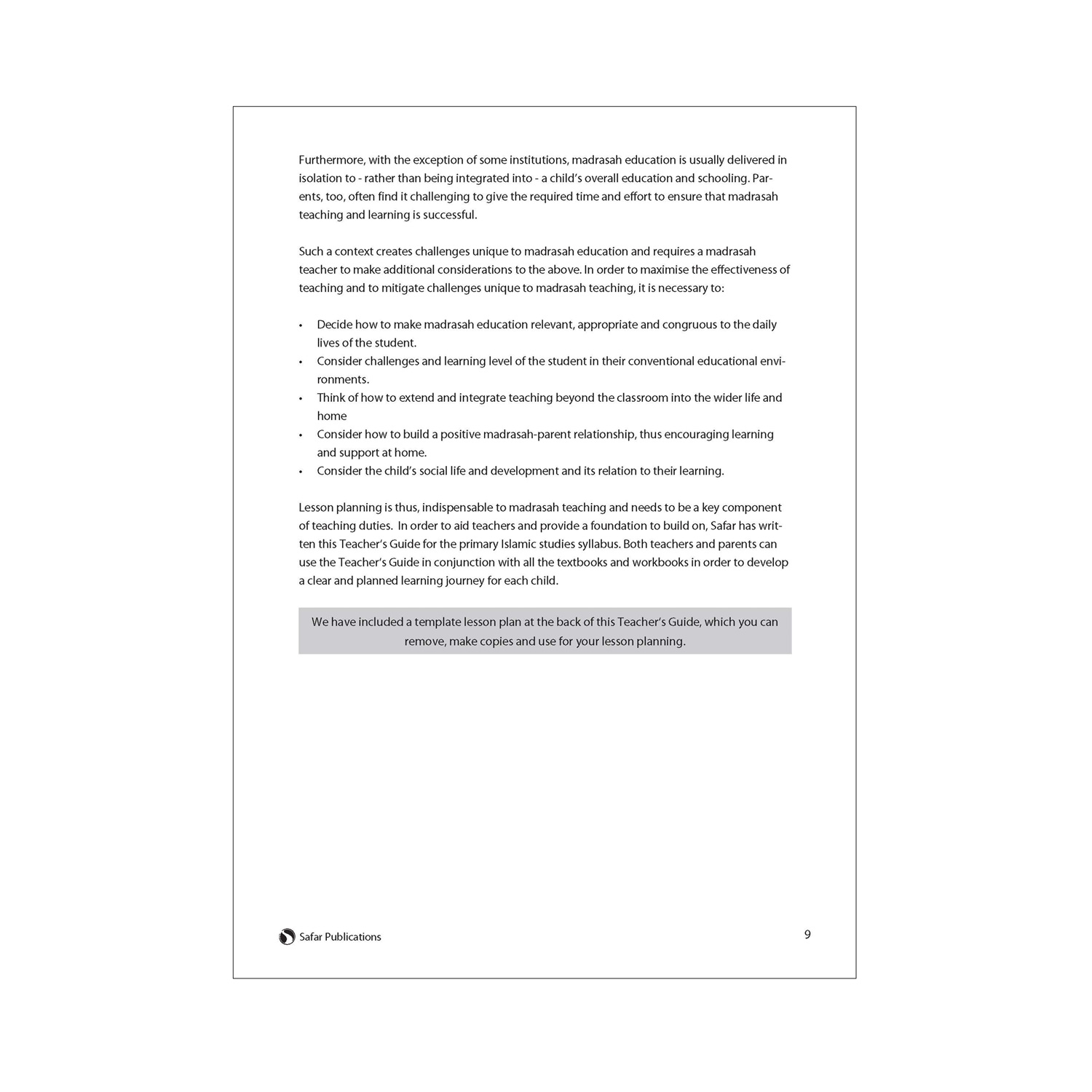
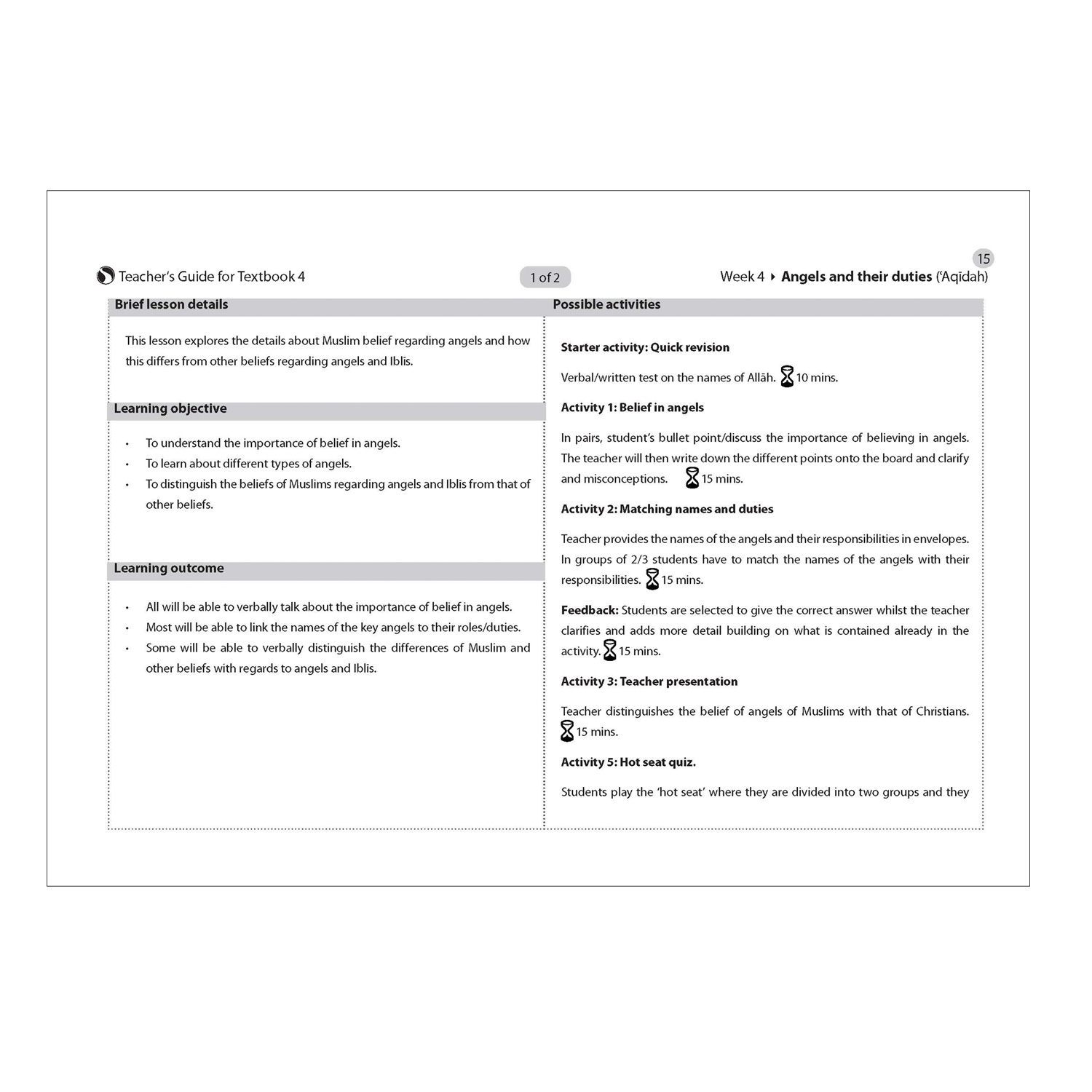
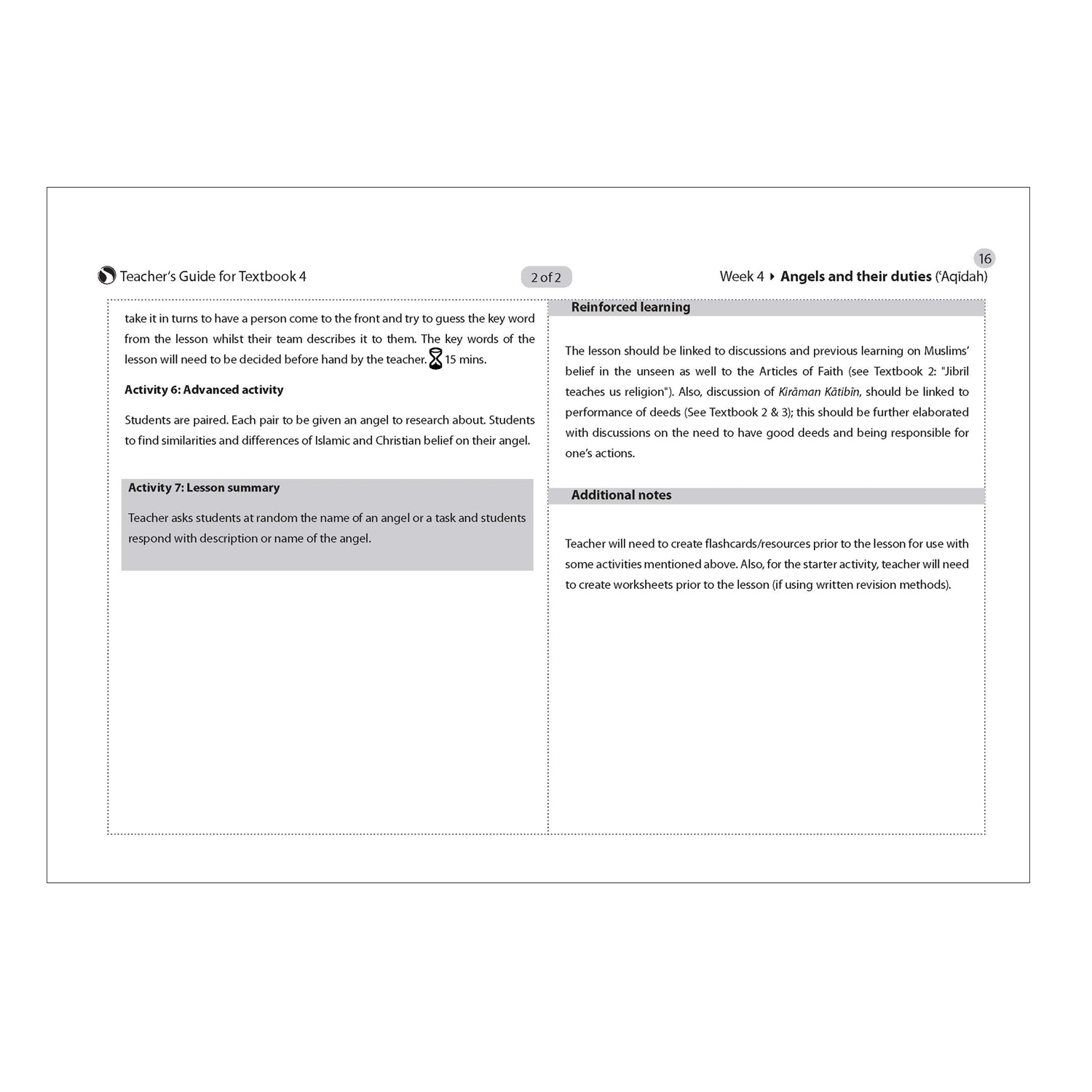
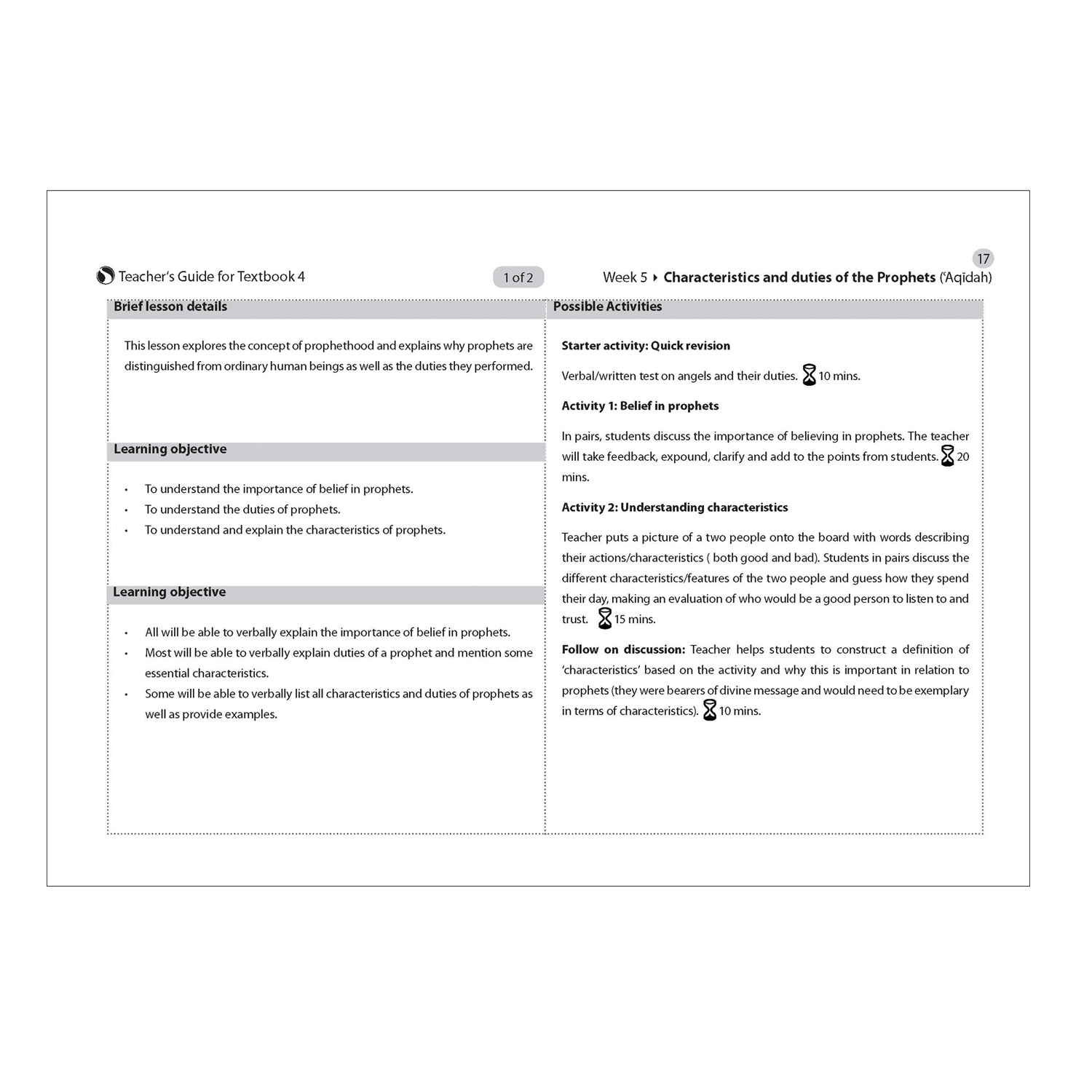
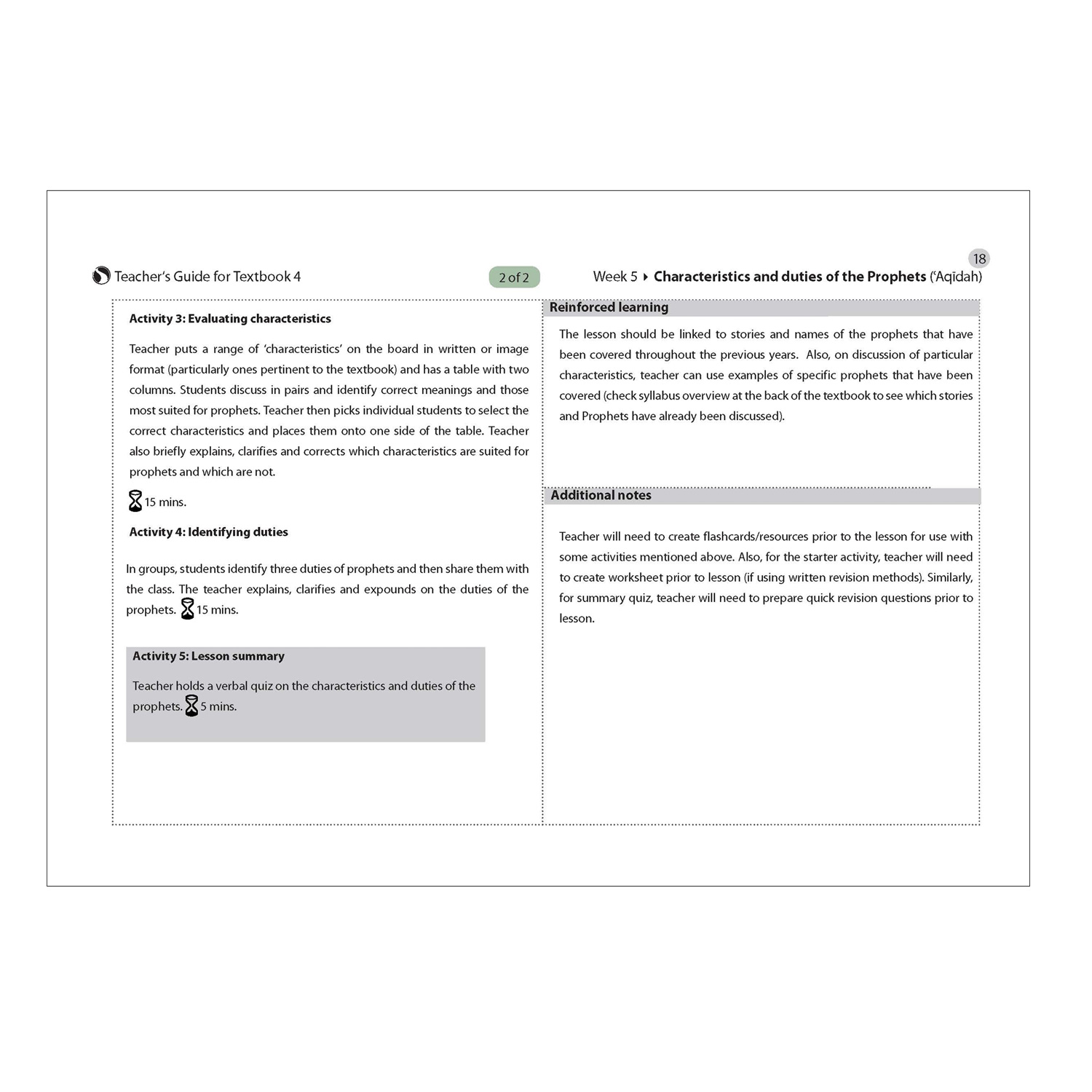
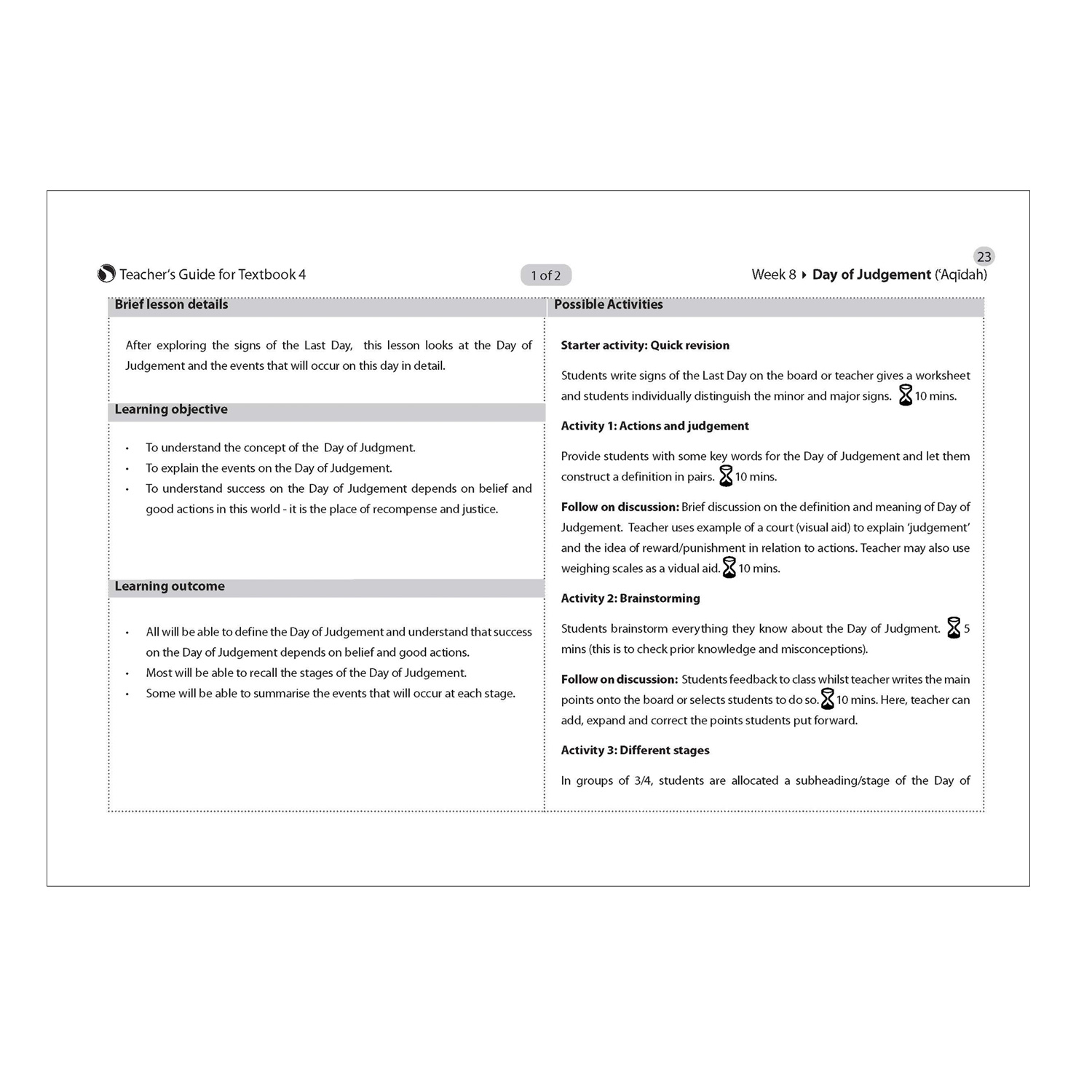
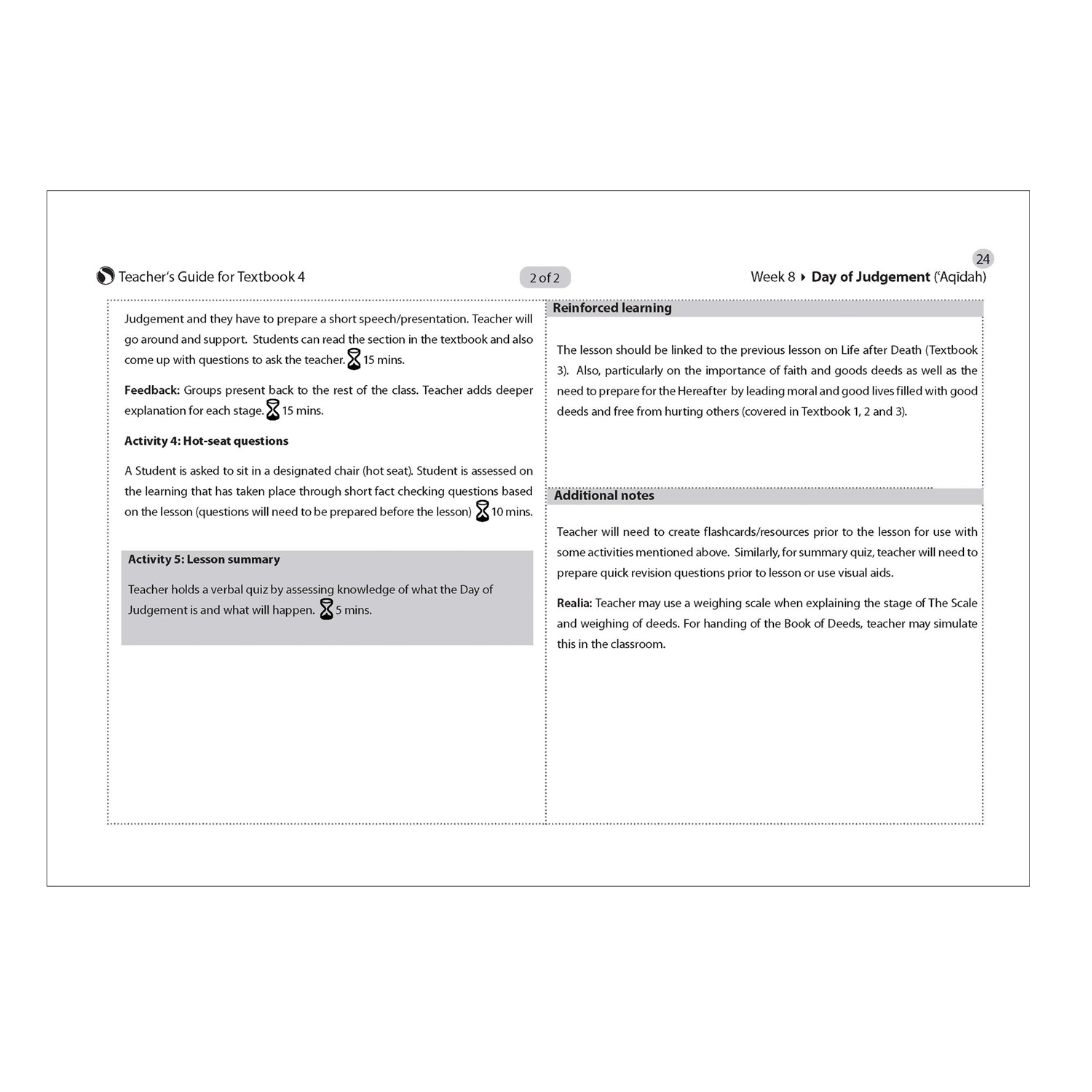
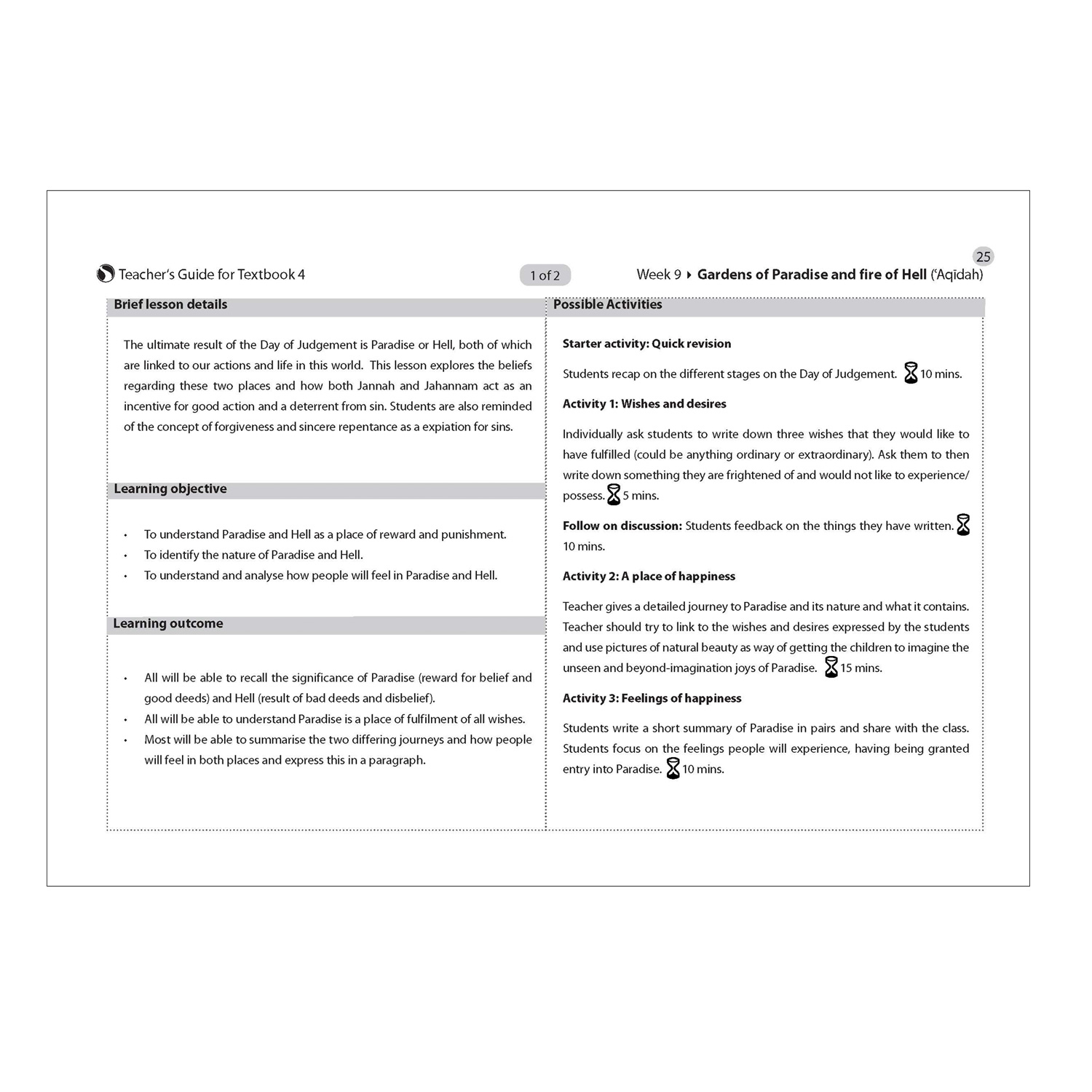
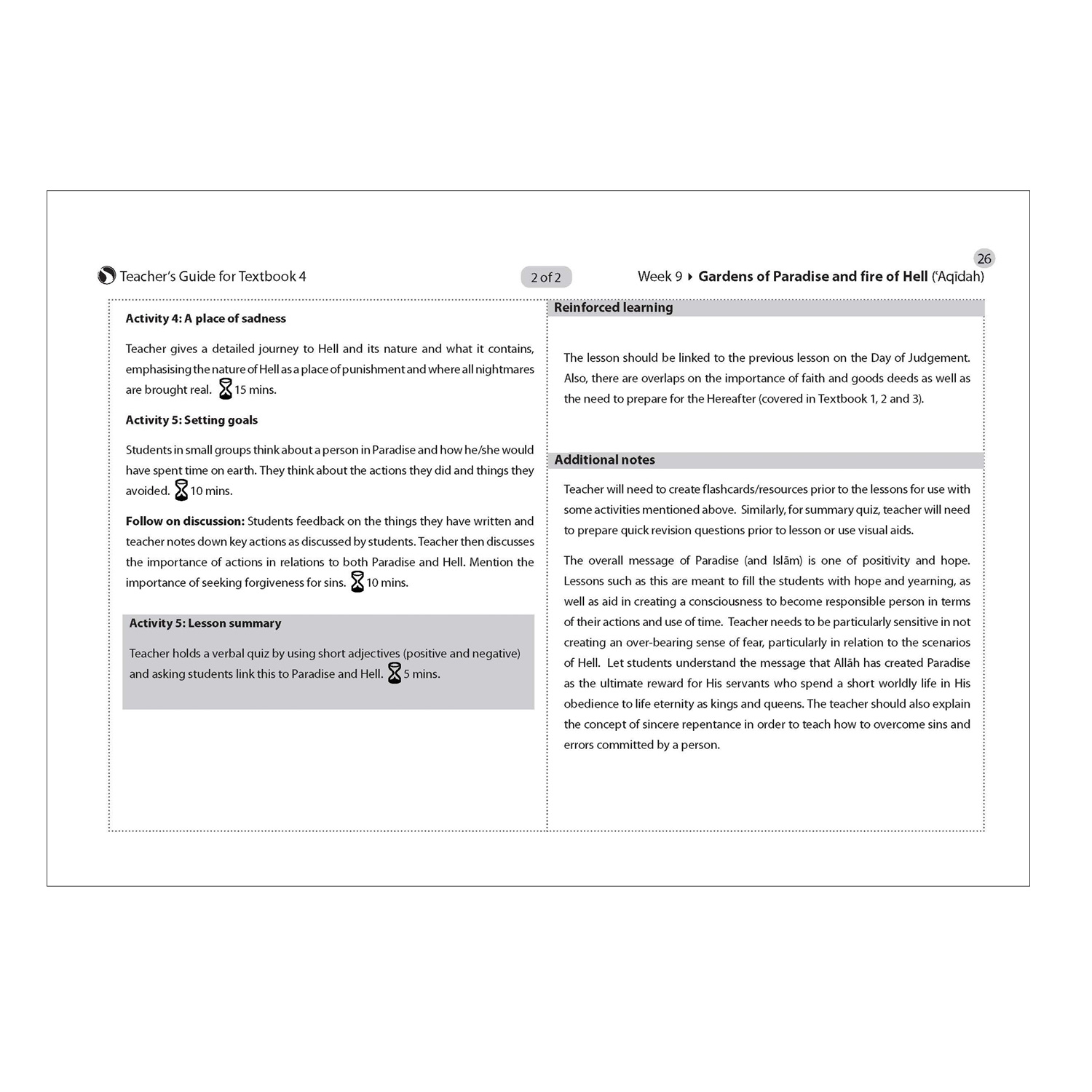


Safar Schemes of Work (SoW) covers all teaching aspects and textbook material in a detailed manner for both Key Stage 1 and 2. From suggesting learning objectives, differentiated learning outcomes to detailed explanations of activities. Using the SoW is the easiest, time-efficient and the most effective way of planning and teaching the Safar Islamic Studies primary series syllabus.
Safar Schemes of Work contain brief details about the contents of the lessons to act as a quick snapshot of what is to be covered. Also, to ensure that the syllabus is taught in a holistic manner, we have included links to previous learning activities/experiences where a subject or theme is revisited or extended, which is vital in facilitating students to consolidate their knowledge and learn coherently rather than simply learn through a fragmentary manner.
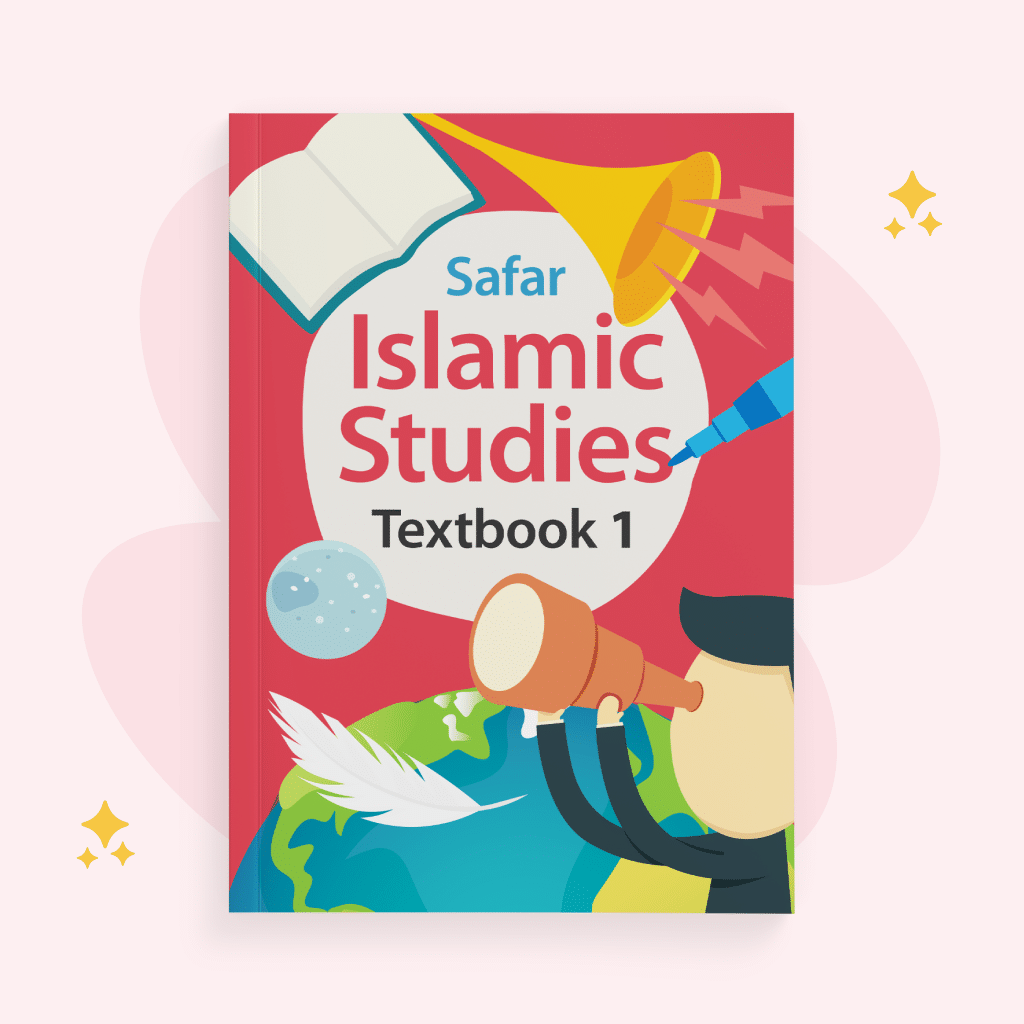
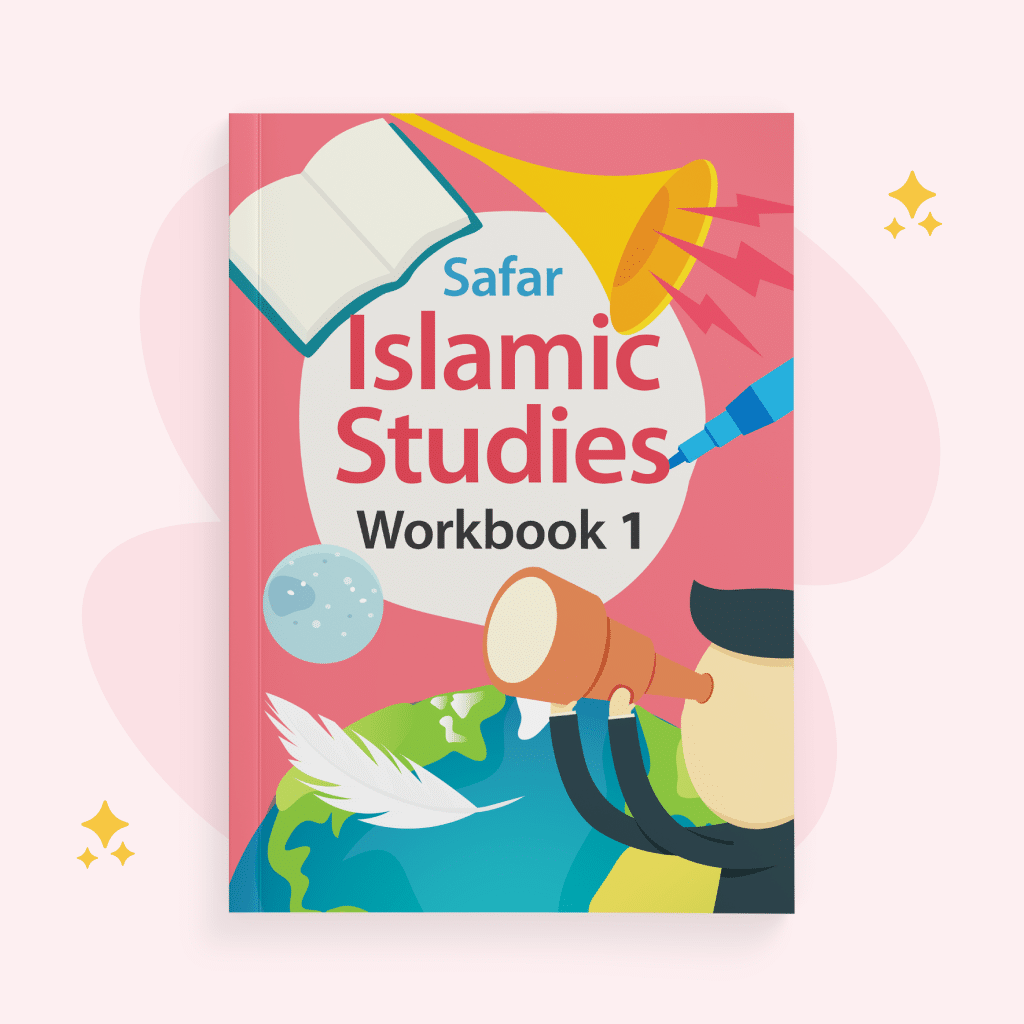
Using the textbooks, workbooks and schemes of work, the teacher is able to ensure that teaching is dynamic, focused and clearly thought out; thus ensuring that the learning experience for the child is maximised as much as possible as well as coherent, reinforced and systematic.
Developed with both teacher and student input, Safar Schemes of Work employ not only tried and tested methods but also utilise theoretical frameworks such as Bloom’s taxonomy of learning objectives whilst keeping in mind activities suited to all three main types of learners: visual, auditory and kinaesthetic.
Want to know more about the Schemes of Work? Check out the FAQs here.


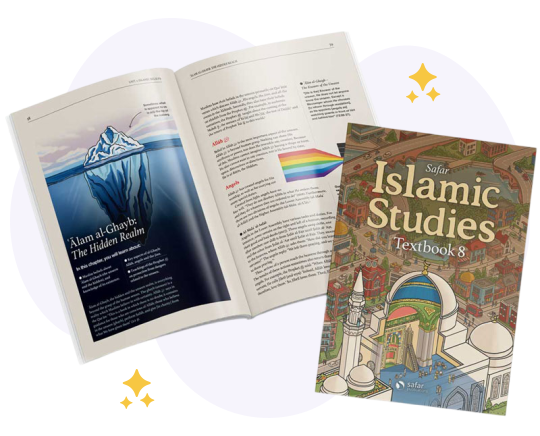
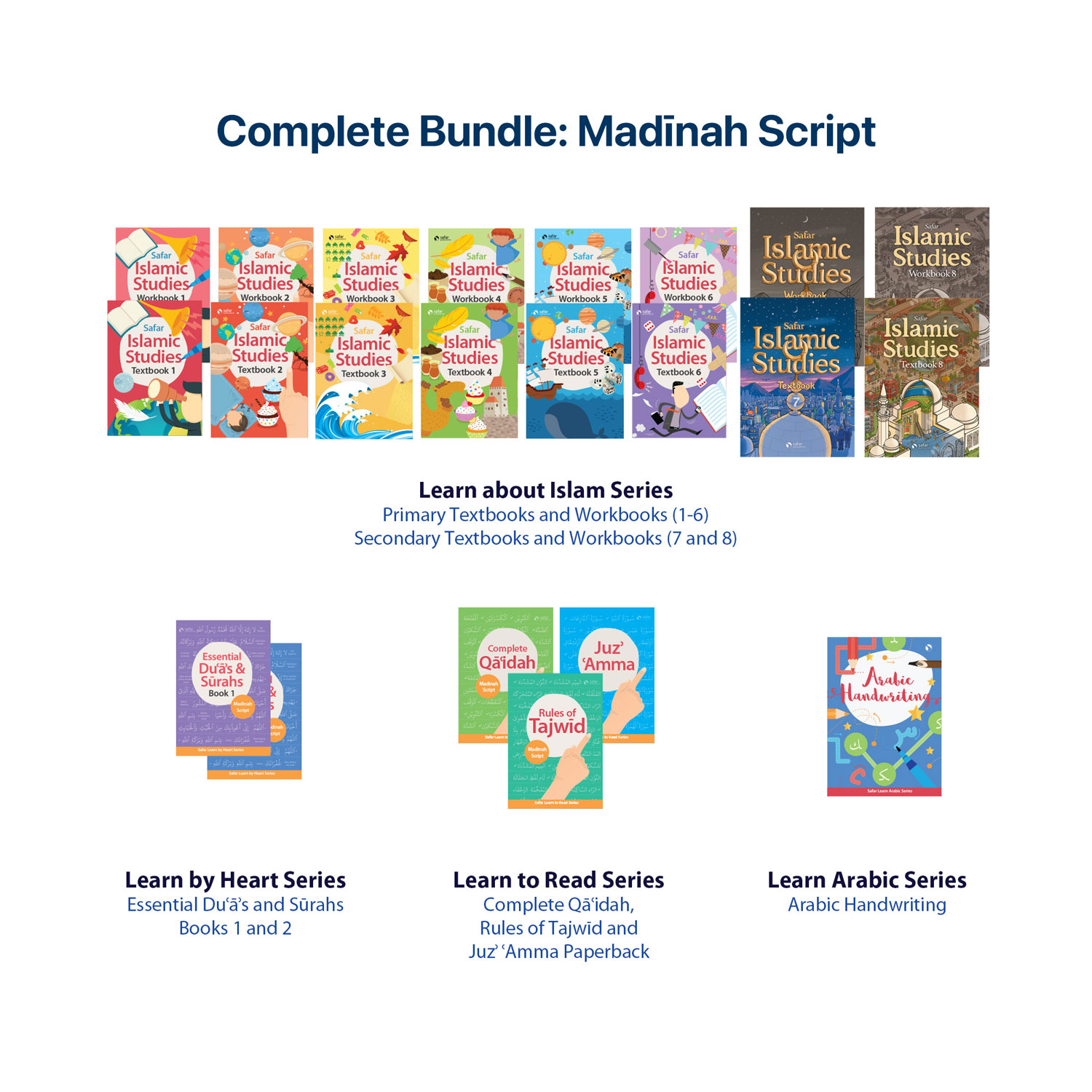

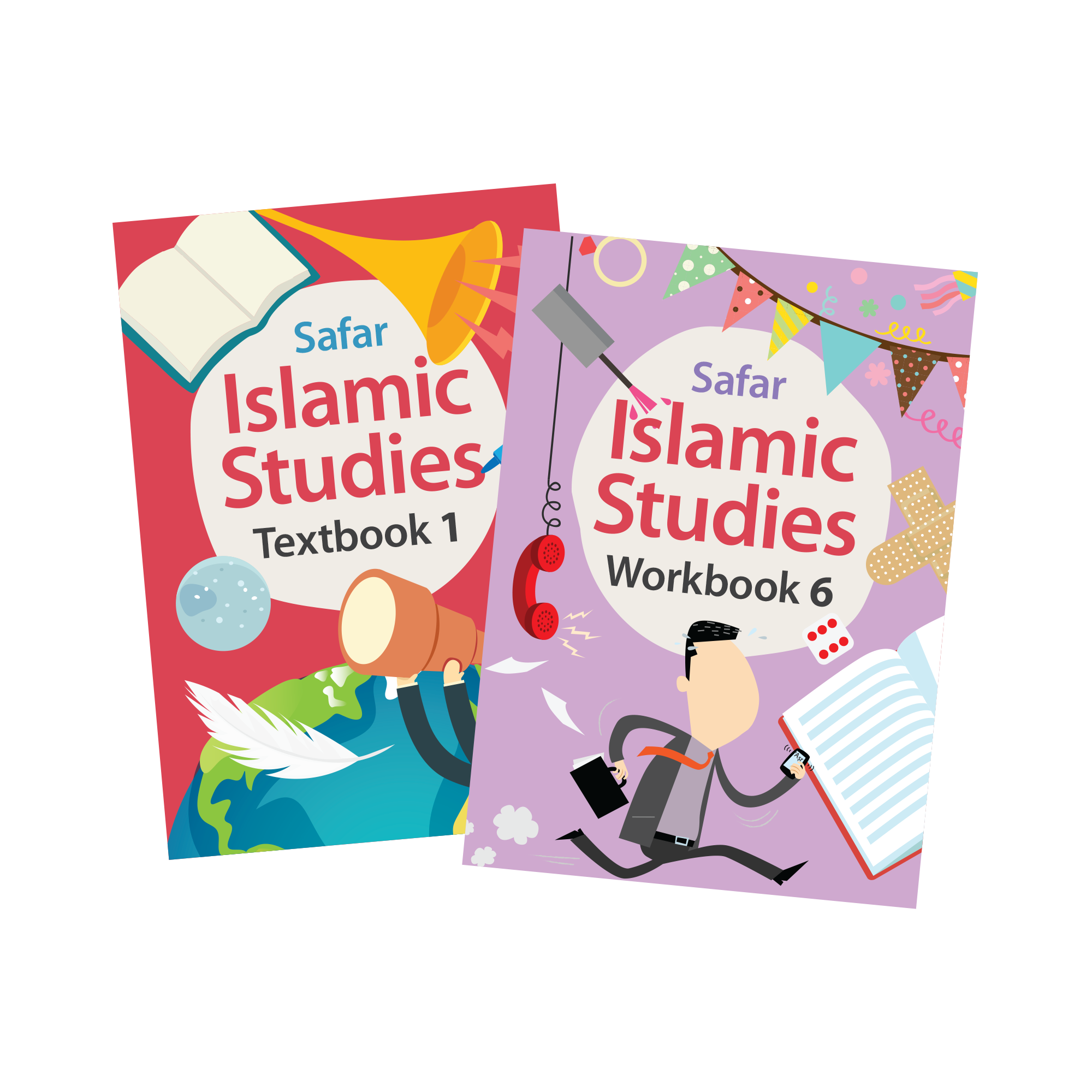





One of the most stressful aspects of teaching is lesson planning, and Safar Publications brought us ease with their Teacher’s Guides. The guide has been particularly helpful in lesson planning for our inexperienced and new teachers at our Islamic weekend program. We are grateful for the Teacher’s Guide and are pleasantly pleased with the quality and thoroughness of the material, Alhamdulillah.